

LET’S ADMIRE THEM, BUT LET’S NOT PICK THEM
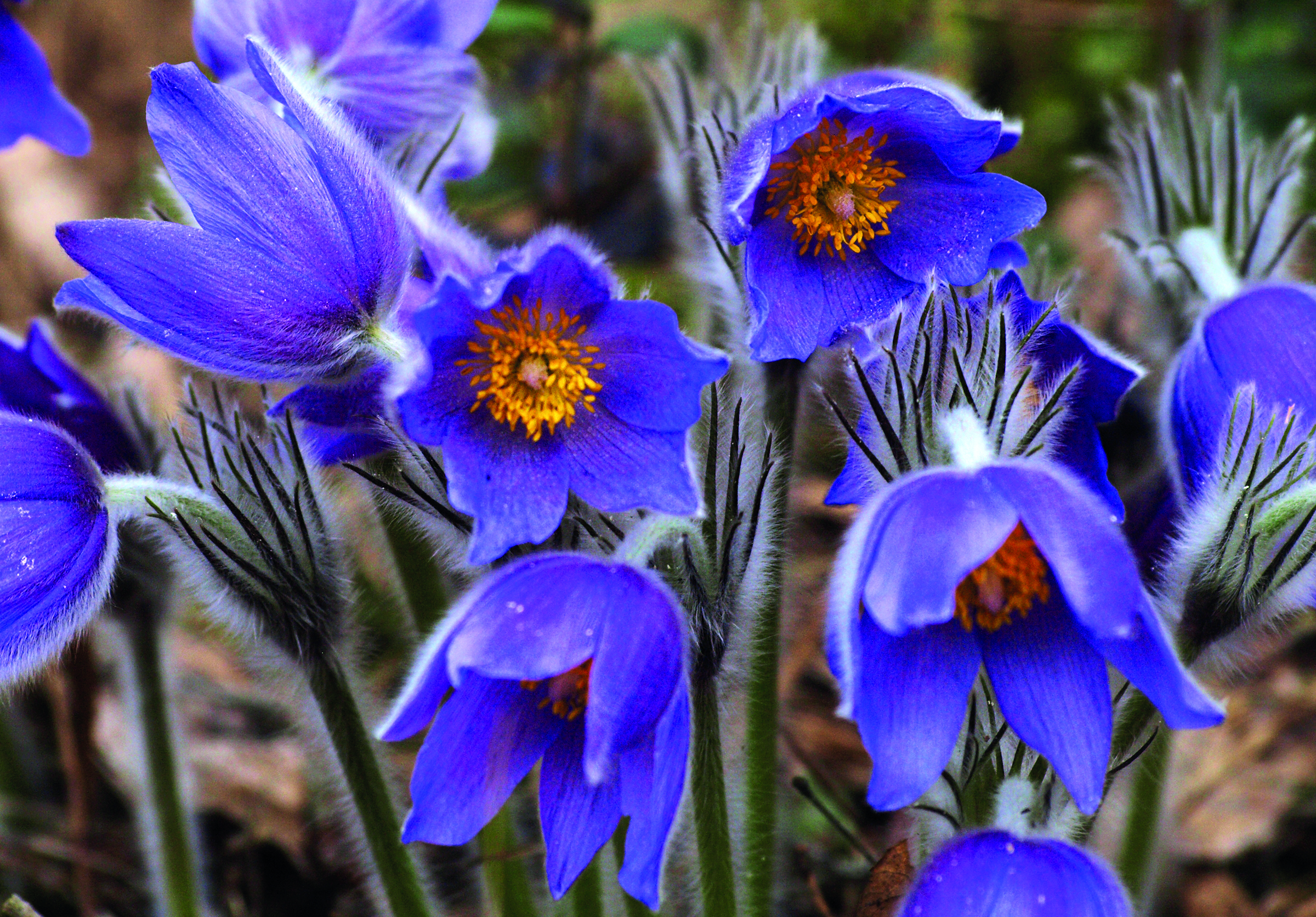
In April and May, the protected plants known as pasqueflowers (Latin: Pulsatilla patens) bloom with stunning beauty. It most commonly grows in dry pine forests, dry forest clearings, forest edges, on dry slopes, and in light sandy soils.
Their flower stalks are softly covered in fuzz, and the flowers are a rich purple, as if draped in velvet. At first they are closed, but later they open into a star shape and begin to catch the spring light.
It is precisely because of their beauty that pasqueflowers often suffer—someone wants to pick them for a bouquet, someone tries to dig them up and transplant them to a garden. This is a mistake. The pasque flower is a protected plant listed in Lithuania’s Red Book, which survives in the wild only under conditions suited to it. When transplanted, it does not take root—it requires pine-covered slopes, specific soil, and natural terrain.
Furthermore, it’s important to know that all parts of the snowdrop are poisonous. The plant’s sap can cause skin or mucous membrane irritation, so it’s better to simply observe it rather than touch or pick it.
So let’s stop at the edge of the forest, look at these flowers of rare beauty, and… simply admire them. Moments of spring fade quickly—but in photos, they last a long time.
Let’s leave nature’s wonders where they belong—in the wild—so that we can return every year and see the windflower blooming once again.
Translated with DeepL.com (free version)